The Sartorial Self
June 1, 2019 — July 27, 2019
About the Show
Featured Artists
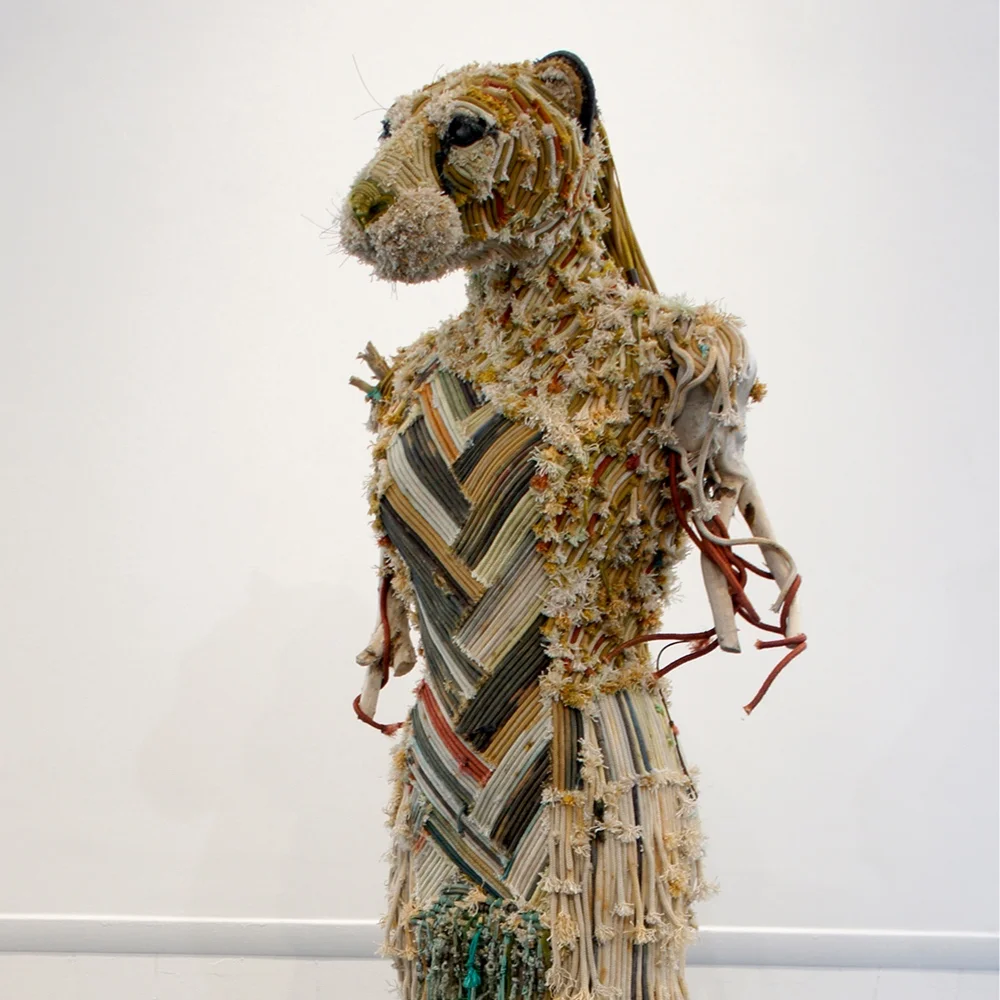
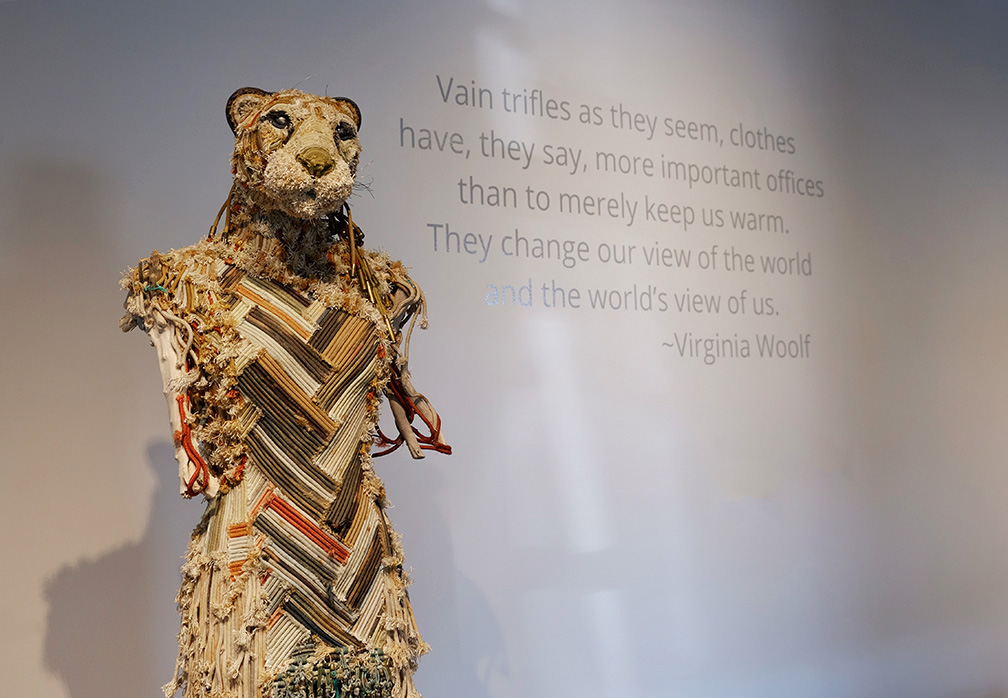
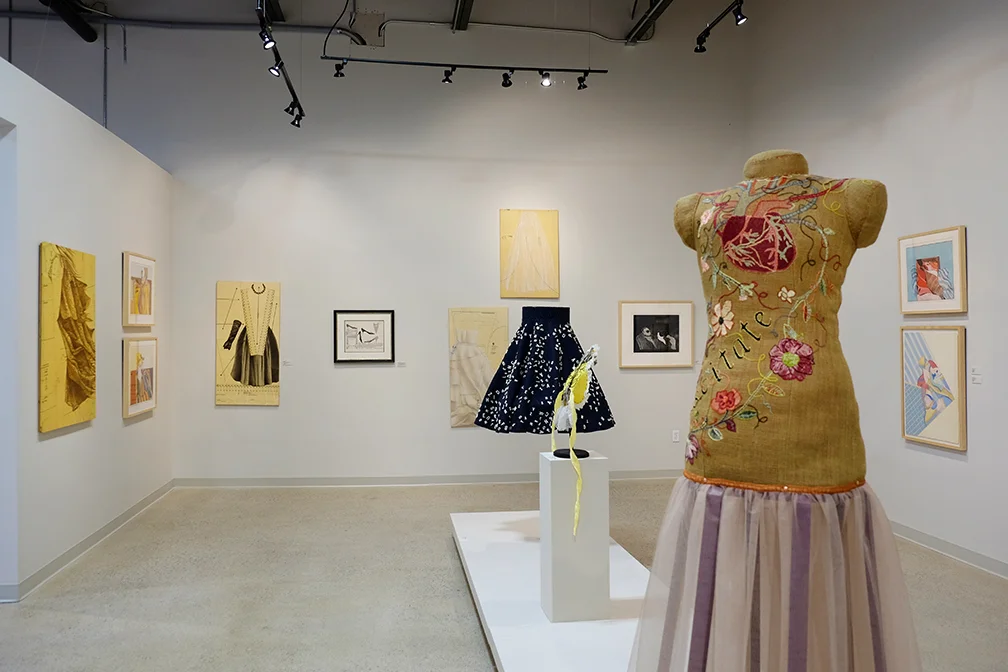
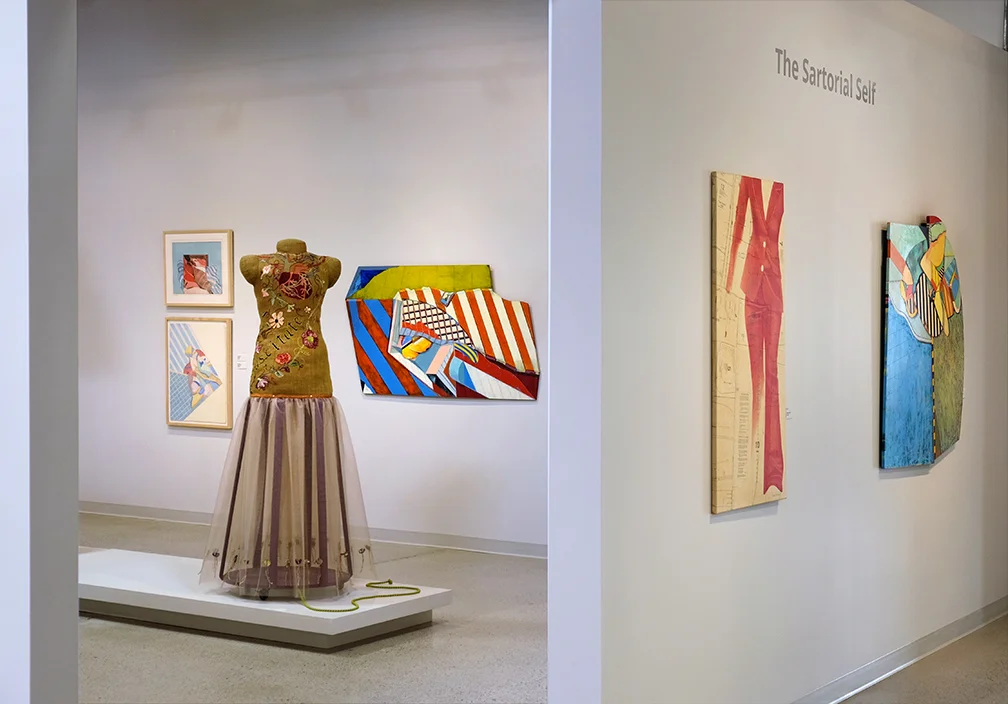
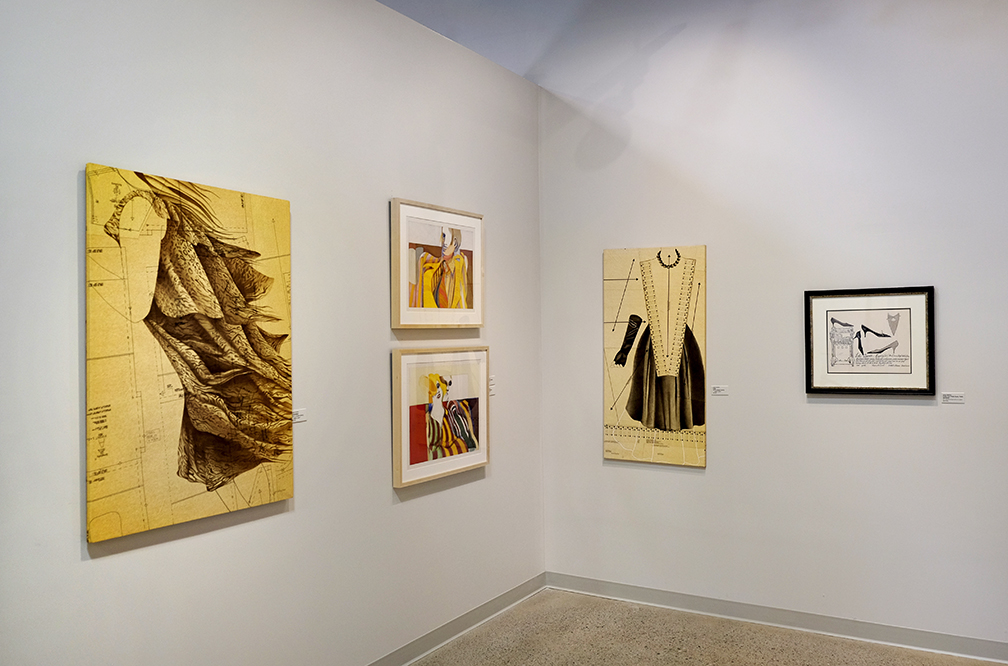
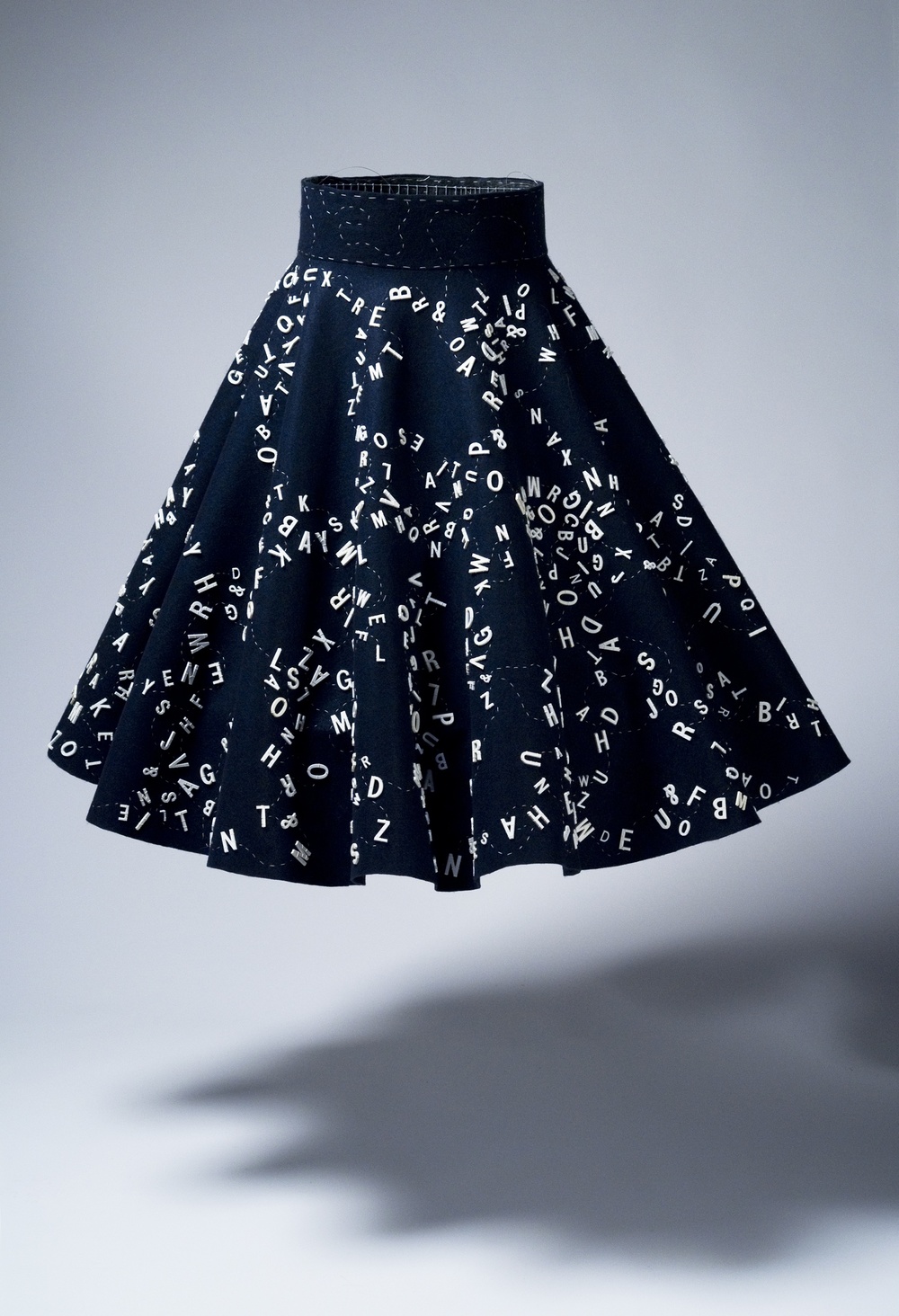
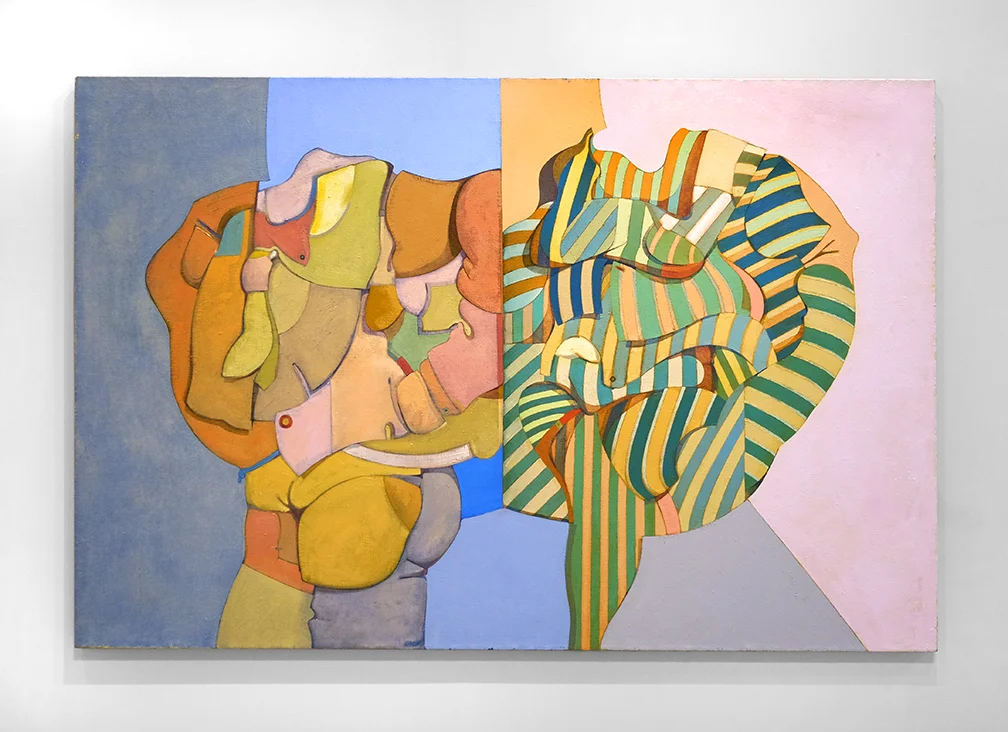
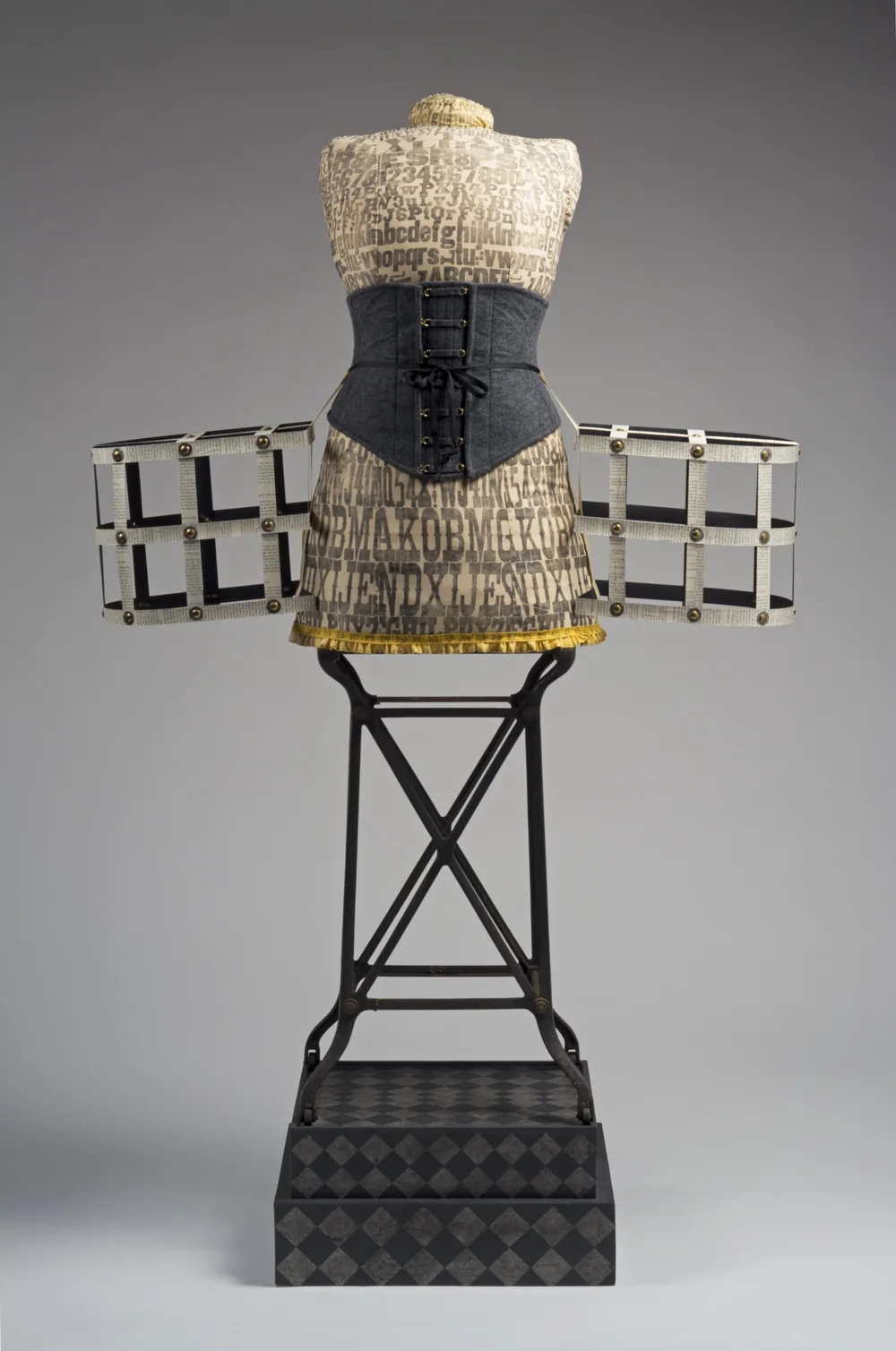
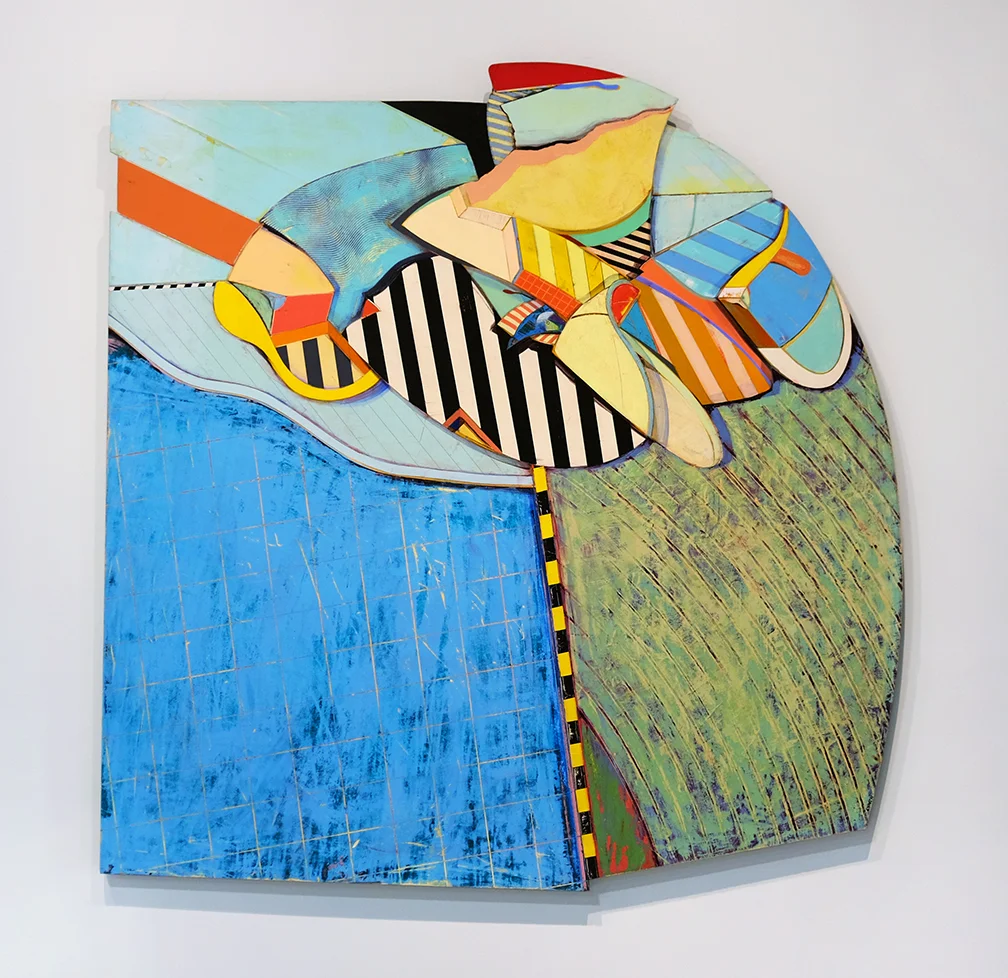
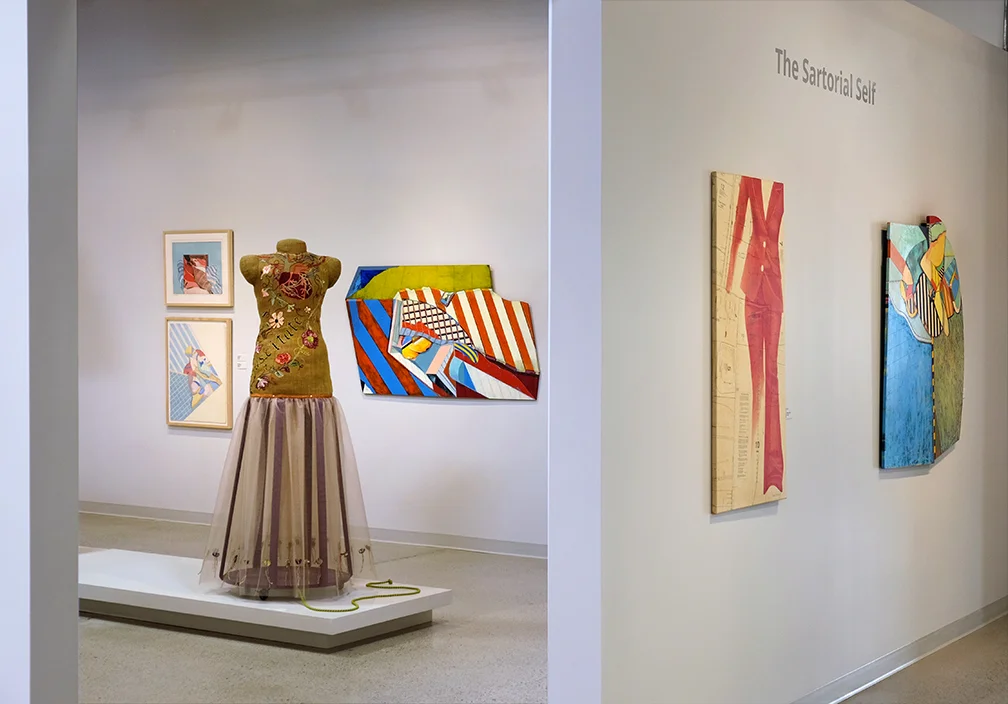
The Sartorial Self is a fun, gorgeous, and thought-provoking meditation on the role fashion plays in shaping and expressing identity. This exhibition features bold 1970’s and 1980’s watercolors and wooden constructions by Fred Lynch alongside Lesia Sochor’s translucent images of women’s garments and mannequins, painted on found sewing patterns, and Crystal Cawley’s 2- and 3-dimensional works inspired by the artist’s interests in the form and history of clothing and the possibilities of paper and fabric sculpture with traditional handiwork. The show also features an authenticated 1950’s Andy Warhol illustration for Capezio Shoes, and Gin Stone’s magnificent and ultra haute cat goddess, Bast, who, like her runway worthy gown, is made from reclaimed North Atlantic fishing gear.
Crystal Cawley’s work combines her interests in the form and history of clothing and the possibilities of paper and fabric sculpture with traditional handiwork like embroidery, spinning, and letter press spinning. Starting with something tangible, such as a box of old greeting cards or puzzle pieces, Cawley incorporates the visual history of the discarded objects into something beautiful and new.
In a career lasting over 50 years, Frederick Lynch’s work began with the observed world and then delved deep into the underlying structures below surface appearances. He lived in Maine for 44 years, teaching at the University of Southern Maine. In 2005, the Farnsworth Art Museum exhibited a 20-year survey of his work, and his work is in numerous public and private collections, including the Portland Museum of Art.
An artist for over 40, Lesia Sochor began her Threads series in 2007 when she was inspired by wooden spools of thread connecting her to her female ancestors. This work evolved into her Bodice and Mannequin series as well as the other work included in our “Sartorial Self” exhibition.
An ardent environmentalist and lover of living creatures, Gin Stone uses hand-dyed reclaimed longline fishing gear to create “humane taxidermy.” By bringing the recovery and recycling of use North Atlantic fishing gear to the creation of her sculptures of unusual creatures and otherworldly chimera, she hopes to put a spotlight on the collaboration of science, sustainable fishery practices, and creativity.